

Cat health · Published by HappyWags
A Holistic Vet Explains What That Dry Hack Your Cat Makes Could Be Telling You
Neck stretched low. Nothing comes up. Here's the question I now ask every owner who describes it.
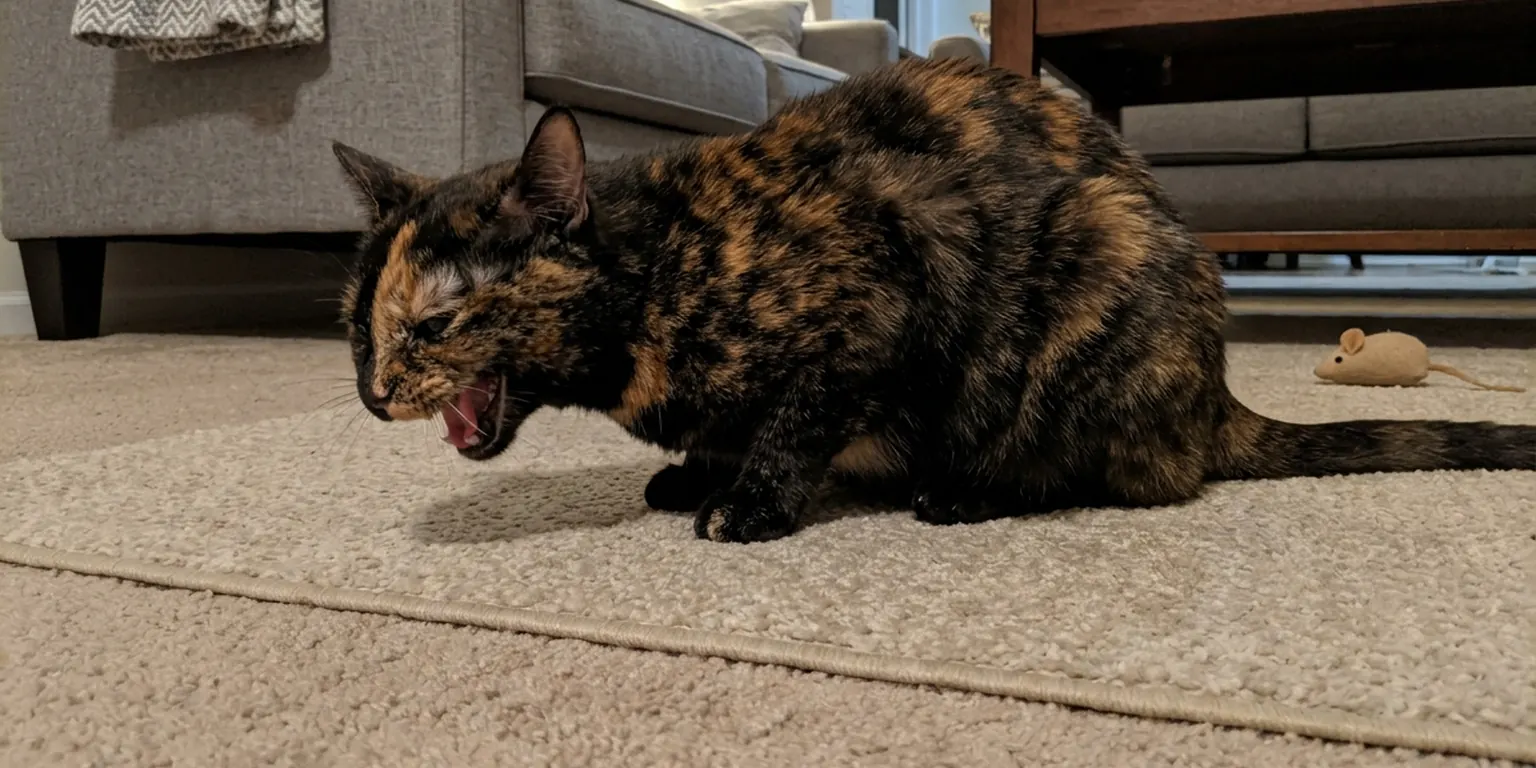
You hear it from the next room. A dry, raspy hack, over and over.
You find your cat crouched low, neck stretched out flat along the floor, sides pulling in with each heave. You brace for the hairball.
Nothing comes up.
A minute later they wander off as if nothing happened, and you're left wondering whether that was normal.
If you've watched that scene more than once, I wrote this for you. Some version of it comes up in my exam room almost every week.
What you were probably told
When owners describe that hack, most go home with one of a handful of answers. Hairballs. Feline asthma. Allergies. A sensitive stomach. Or the old favorite: "Some cats are just pukers."
I want to be fair here, because these are real causes. Hairballs happen. Asthma is common in cats and very manageable. A change of food can settle a touchy stomach. A lot of the time, one of these is the right answer.
But in my practice I've learned to ask one more question.
Is the hack the only thing that's changed? Or is it one of several small things?
The pattern most owners miss
An occasional hack on its own doesn't tell me much. What I pay attention to is whether it shows up next to other quiet changes. Each one is easy to put down to age or personality.
Together, they're worth a closer look. Frequent vomiting and nausea can be among the quieter signs of kidney changes in cats, and they're some of the easiest to write off.
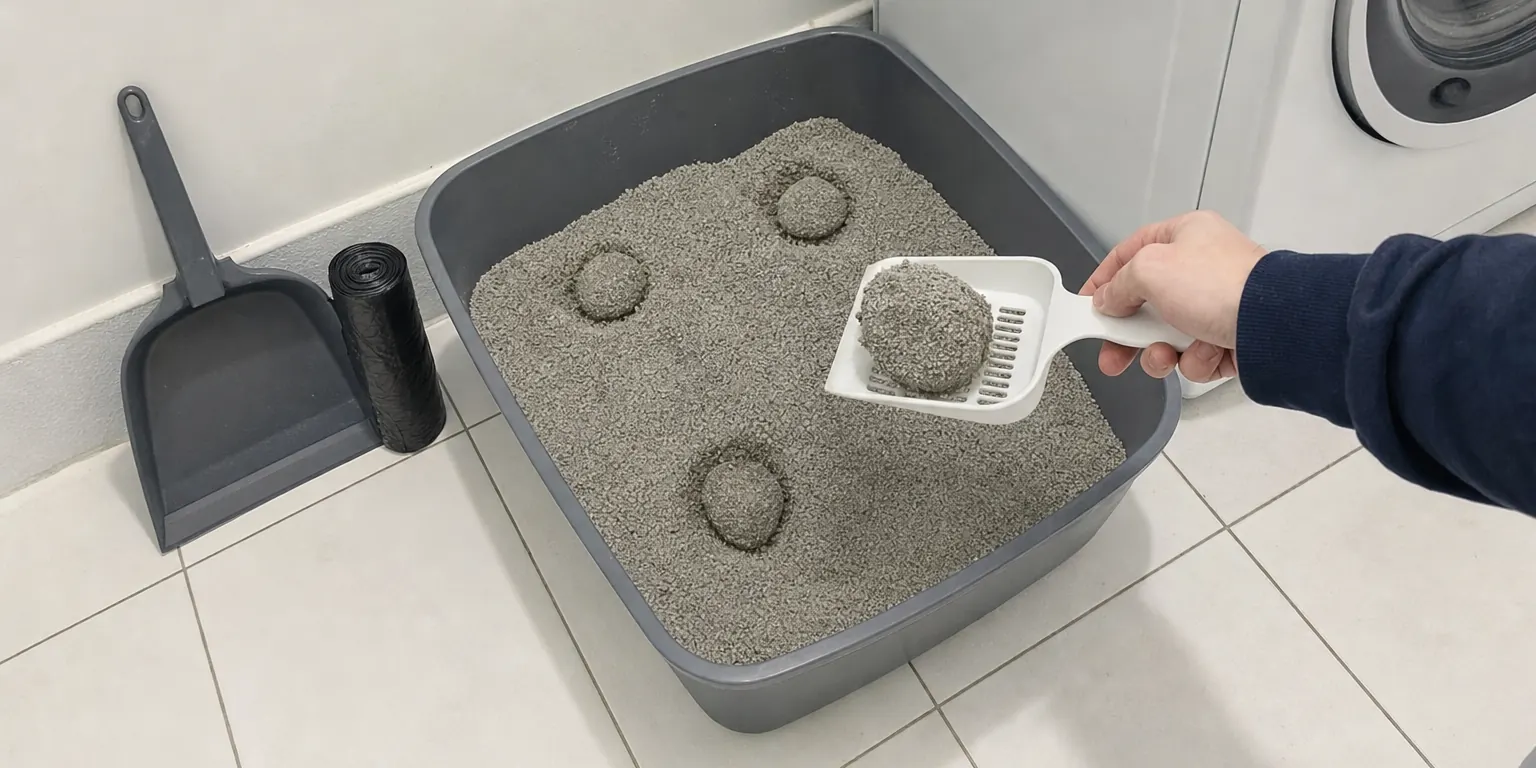
Six quiet signs to look for
Each one is easy to put down to age. Each can also have many causes.
- Bigger clumps in the litter boxMore urine means bigger, heavier clumps than you used to scoop.
- Drinking more, or from the faucetExtra trips to the water bowl, or a new interest in running water.
- Feels lighter when you pick them upSlow weight loss is hard to see when you see them every day.
- A rougher, duller coatLess grooming, or fur that looks dry and unkempt.
- Sleeping more than they used toMore naps and less interest in play.
- Getting picky with foodWalking away from meals they used to finish.
One sign on its own is common and often nothing. Two or more, together with the hacking, is worth raising with your vet. Ask whether a kidney check with SDMA makes sense (more on that below).
Either way, if your cat is vomiting or hacking often, book a visit with your vet. That's always the first step.
Why cats, specifically
Here's the reason I started asking that extra question.
Every mammal makes a protein called AIM. One of its jobs is to help clear away the dead-cell debris that collects in the kidneys' tiny filtering tubes, so it doesn't build up over time.
In 2016, a University of Tokyo team led by Prof. Toru Miyazaki published a finding in Scientific Reports.1 In cats, AIM binds to an antibody in the blood called IgM about 1,000 times more tightly than it does in mice. Because it stays stuck, it doesn't release to do its cleanup job when the kidneys need it. Mice given the cat version of AIM fared worse after kidney injury than normal mice.
The researchers suggested this may help explain why so many cats run into kidney trouble as they age. It's early work, much of it done in the lab, and the research is still going. But it changed how I look at cats: their kidneys' cleanup crew may be working at a disadvantage from day one.
So when a cat is hacking and showing a few of those quieter signs, I don't stop at the hairball theory. I want the kidneys checked too.
You're already doing a lot
If you're reading this, I'd guess you already run a water fountain, feed wet food and keep up with checkups. Good. Those things matter. Water helps the kidneys do their work, and bloodwork is how we spot changes.

Here's the gap. None of them supports that cleanup pathway. A fountain keeps water moving through the kidneys, but it doesn't help with the debris AIM is meant to clear.
There's one more thing most owners are never told. Creatinine, the kidney marker on routine bloodwork, often doesn't climb until up to 75% of kidney function is already gone. A newer marker called SDMA tends to rise earlier, on average at around 40% loss.2,3
My advice: ask your vet whether your cat's next blood panel includes SDMA. It's usually a simple add-on, and for a cat with any of the signs above, it's the most useful question you can bring to the appointment.
The missing piece: daily kidney support
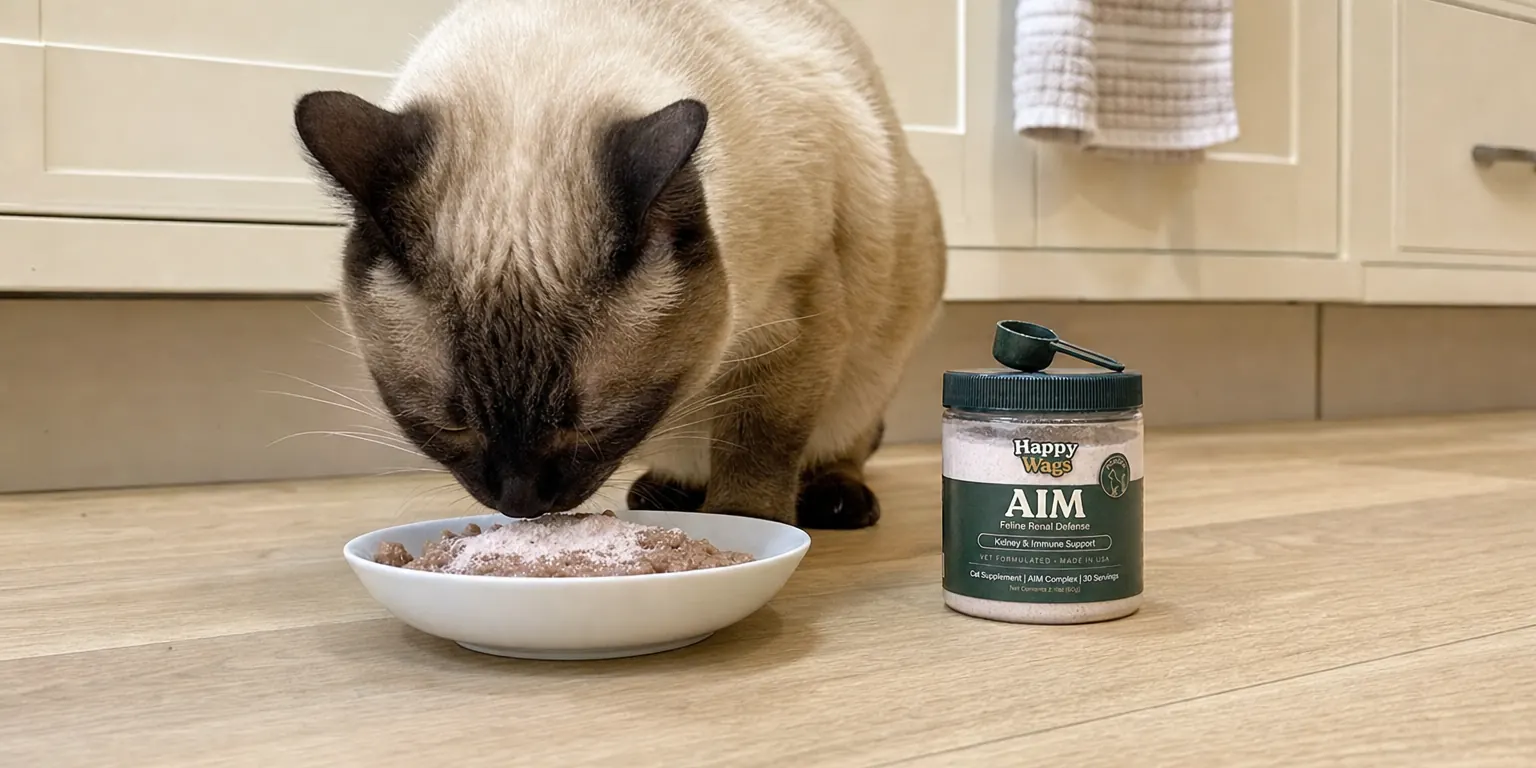
This is where daily support comes in, alongside your vet's care and never instead of it. The one I recommend is HappyWags AIM.
The name comes from the research. What's in the tub is a daily blend of amino acids and immune-support ingredients, chosen to support normal kidney and immune function,* in a bonito base cats actually want to eat.
What's in every scoop
No proprietary blend. Every active ingredient is on the label, with its dose.
- L-Cystine150 mgA sulfur amino acid the body uses to make glutathione, its own antioxidant.
- L-Methionine100 mgAn essential amino acid that works alongside L-Cystine.
- Taurine50 mgEssential for cats. Supports heart, eye and immune health.*
- Astragalus Root Extract50 mgA traditional herb long used to support kidney health.*
- Yeast Beta-Glucans50 mgSupport normal immune-cell activity, including the macrophages that clear debris.*
Base: Freeze-dried bonito powder
No pills, no wrestling
It's a powder you stir into wet or dry food once a day. Because the base is freeze-dried bonito, most cats eat it like a treat. No pilling, and no hiding capsules in their dinner.
What owners are saying
I'd rather you hear it from owners than from me. A few HappyWags customers, in their own words:
"She took to it right away"
"Started her on AIM maybe 6 months ago. She took to it right away which surprised me because she's picky about everything. I don't want to overstate it but her coat looks noticeably better."SophieVerified Buyer
"Big difference"
"I was worried she wouldn't eat it. She eats it before the rest of her food. Every single morning. Her coat is shinier, she's more energetic, and she's been waking me up at 5am again which honestly I missed."JenniferVerified Customer
"It's like she went back in time"
"Three months on AIM. Her fur is softer, she's grooming herself more, and she's put on a little healthy weight. My vet actually commented on how good she looks at her last checkup. She's 11 and moving like she's 6."MichelleVerified Customer
"Both my cats look completely different"
"Two cats, both on AIM for about four months. Softer coats, more energy, more playful with each other. The older one is 13 and my vet said she's never looked better. I don't say that lightly."RyanVerified Customer
Customer reviews from happywags.co, quoted as written. Every cat is different.
Early Black Friday pricing
Here's what HappyWags AIM costs on the HappyWags store right now.

Price guide only. You'll choose your bundle and check out on the product page.
- 1 tub30-day supply · $1.17/day$35
$60Save 42% - 2 tubs60-day supply · $28 per tub$56
$120Save 53% - 3 tubsBest value90-day supply · $23 per tub$69
$180Save 61%
Supply is for one scoop a day (a cat of 7 to 16 lbs). Prices are the Subscribe & Save prices shown on the HappyWags product page.
- Free shipping on every order
- 60-day risk-free trial
- Refills ship every 30 days. Stop or cancel anytime.
Questions owners ask me
Will it stop the hacking?
No, and I'd be wary of anything that promised to. AIM is daily kidney support, not a treatment for vomiting or hacking. If your cat hacks or vomits often, see your vet to find the cause. AIM can sit alongside whatever your vet recommends.
Can my cat take it with a kidney diet?
Many owners stir it into their cat's usual food, prescription diets included. If your cat is on a prescription kidney diet or any medication, show your vet the label first. Every dose is listed, so it's a quick conversation.
What about picky eaters?
The base is freeze-dried bonito, which most cats love. For a fussy cat, start with a pinch on a food they already like and work up to the full scoop over a few days. If your cat still won't touch it, you're covered by the 60-day risk-free trial.
What about multi-cat homes?
Each cat gets their own scoop, based on weight, so a tub goes faster with more cats. For two or more cats, the 2- or 3-tub bundles make the most sense. Serve each portion in its own bowl so you know who's had theirs.
How long before I notice anything?
Think months, not days. AIM is support for the long run. Some owners mention a better appetite or a softer coat within the first few weeks, but that varies from cat to cat. The kidney side isn't something you'll see day to day, which is exactly why regular checkups and bloodwork matter.
A note before you go
If your cat hacks now and then and is otherwise their usual self, it may well be a hairball. That's fine.
But if the hack comes with a few of those quieter signs, don't let "some cats are just pukers" be the end of the conversation. Ask your vet the one extra question. Ask about SDMA. And think about starting daily kidney support early, while your cat is still doing well.
- Sugisawa R, Hiramoto E, et al. Impact of feline AIM on the susceptibility of cats to renal disease. Scientific Reports. 2016;6:35251. doi.org/10.1038/srep35251
- Hall JA, et al. Comparison of serum concentrations of symmetric dimethylarginine and creatinine as kidney function biomarkers in cats with chronic kidney disease. Journal of Veterinary Internal Medicine. 2014;28(6):1676-1683.
- IDEXX Laboratories. IDEXX SDMA Test: SDMA increases on average with 40% loss of kidney function; creatinine may not rise until up to 75% is lost. idexx.com